
By Dr. Thayabaran Pillay
Dr. Thayabaran Pillay is the Co-Founder of Healing By Design™, with Dr. Michael Durst. He has written detailed exploration of the effects of fractals in healing environments for the medical profession and medical students. This article serves as a thoughtful summary of his research and findings.
About Healing by Design™
This organization redefines healthcare by merging evidence‑based medicine with the transformative power of art. It recognizes that environments are not merely decorative but therapeutic, with measurable outcomes that reduce stress, accelerate recovery, and enhance well‑being — turning healthcare spaces into instruments of healing where beauty and science converge.
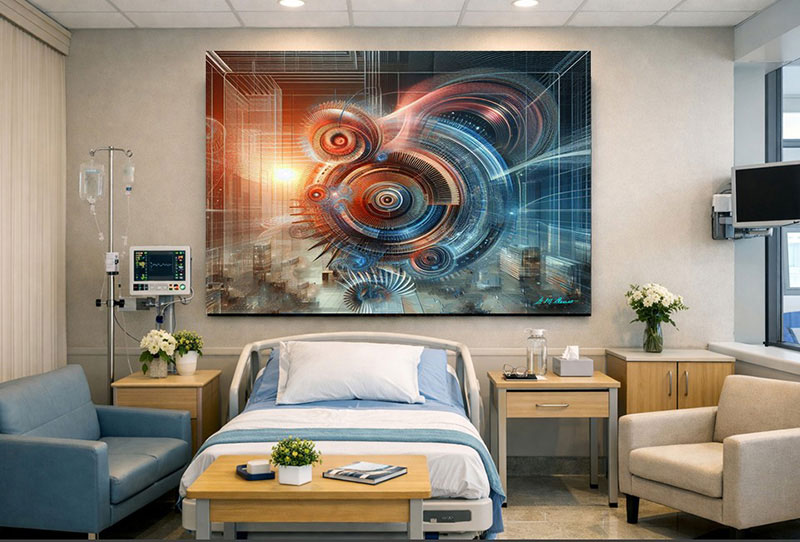
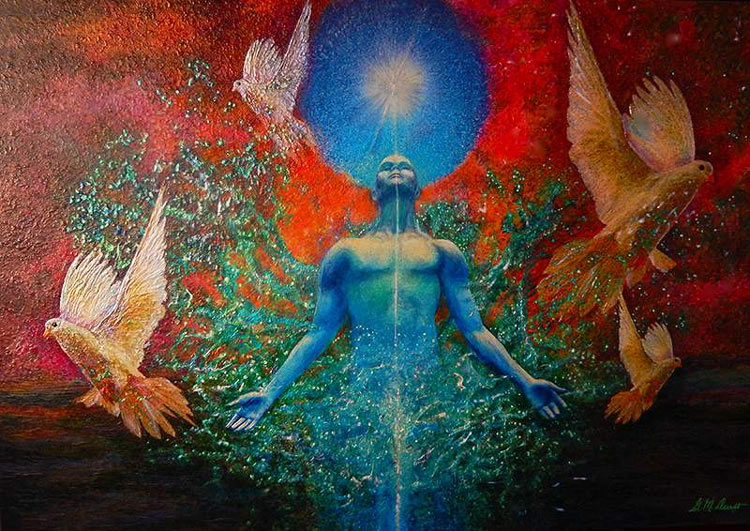
In the world of contemporary art, few figures embody both visionary creativity and scientific resonance as profoundly as Dr. Michael Durst. His fractal masterpieces — vibrant works that unite mathematics, light, and healing energy — stand as milestones in a life of global impact. Both his careers, first as a corporate psychologist and now as an international artist, are monuments to creativity and genius, marking the zenith of a life that history will record.
Durst’s art is not only captivating to the eye; it is restorative to the spirit. His canvases shimmer with luminous geometries that echo the hidden order of nature — coastlines, clouds, trees — patterns our brains instinctively recognize. This recognition is not merely aesthetic. It is physiological, psychological, and profoundly healing.
Why Fractals Heal
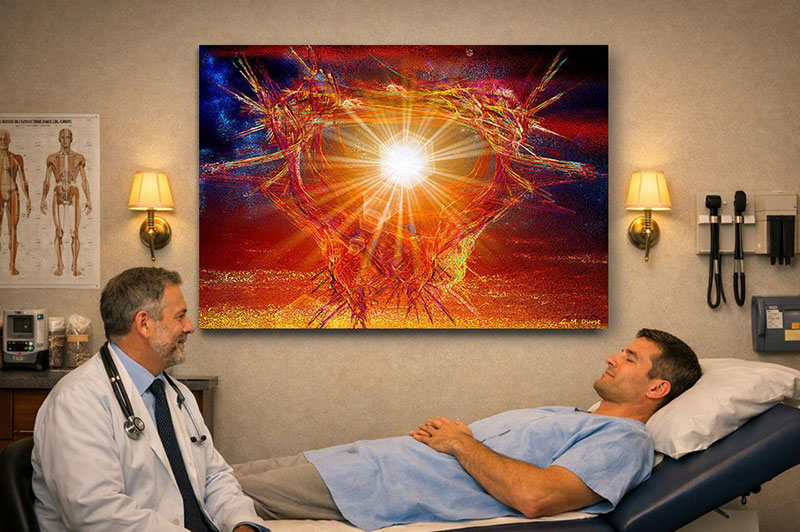
Scientific studies confirm what viewers of Durst’s art intuitively feel: fractals reduce stress, restore coherence, and even help people make better decisions. The mechanisms are striking:
• Perceptual Fluency Theory: Our visual system processes fractal patterns efficiently, reducing cognitive load and inducing calm.
• Biophilic Design Principle: Fractals evoke the same restorative responses as nature, activating the parasympathetic nervous system — the “rest and digest” state.
• Neural Synchronization: EEG studies show increased alpha wave activity, linked to relaxation and creativity, when viewing fractal imagery.
• Heart Rate Variability (HRV): Exposure to fractals improves HRV, a key marker of stress resilience and cardiovascular health.
Durst, trained in HeartMath techniques, integrates this science into his art. “It takes less than five seconds of exposure to the energy of an individual fractal artwork for positive changes to occur in a subject’s heart waves (HRV), respiration rates, body temperature, and brain waves (EEG),” early biofeedback studies reported. Documented changes even extended to subtle energy fields, underscoring the holistic impact of fractal art.
Applications in Healing Environments
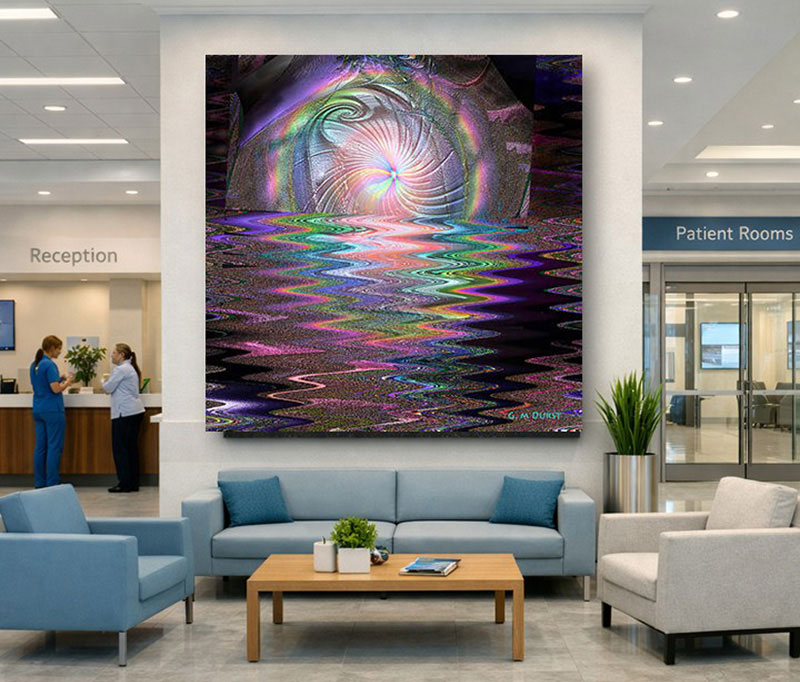
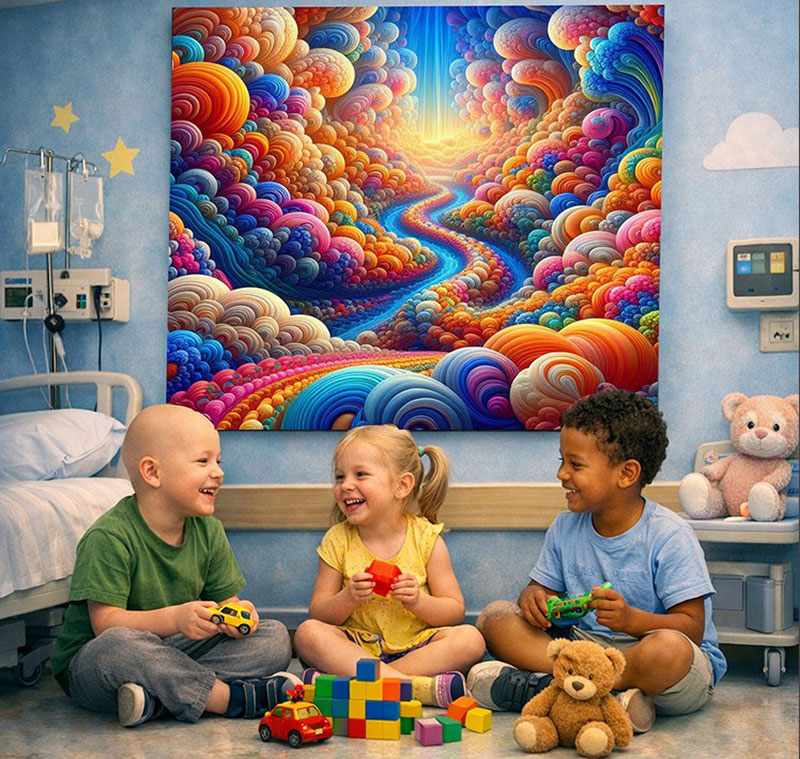
Durst’s works are increasingly sought for hospitals, clinics, and wellness spaces. In a pediatric ward, children surrounded by fractal art experience reduced anxiety and greater joy. In a hospital room, patients recover faster, aided by the calming geometries on the walls. In a physician’s office, fractal art fosters coherence, helping both doctor and patient make clearer, better decisions.
The science is compelling.
• “Exposure to fractal patterns in virtual spaces led to significant reductions in physiological stress markers, including heart rate variability and cortisol levels. Participants reported faster emotional recovery after stress exposure.”¹
• “Abstract fractal environments were as restorative as natural landscapes, reducing stress and improving mood. Passive exposure to fractals was particularly effective in enhancing relaxation.”²
• “Fractal like imagery in mindfulness sessions produced enhanced calmness, reduced anxiety, and improved cognitive focus compared to non fractal environments.”³
Art, Prayer, and Healing
Durst’s art resonates with deeper truths: art, prayer, and healing share the same physiological source. Neurophysiologists confirm they are associated with similar brain wave patterns, autonomic changes, and neurotransmitter shifts. Art takes us inward — into imagery, emotion, and spirit — a journey that is deeply healing.
For those in chronic or delicate health, for the elderly and for those with stress-related diseases, fractal art offers ongoing, non invasive energy support. It is not only beautiful to look at, but a silent partner in recovery, resilience, and renewal.
A Visionary Legacy
Dr. Michael Durst’s fractal impressionism is more than art. It is a bridge between science and spirit, between mathematics and meaning. His luminous works foster serenity, renewal, and healing — gifts as vital in a hospital ward as in a gallery. In a world burdened by stress, his art offers coherence, clarity, and hope.
As one viewer remarked, standing before a Durst canvas: “It is as if the painting breathes with me, calming me, reminding me that I am whole and well.”
Footnotes
1. Anwar Ibrahi (2025), The Role of Fractal Patterns in Modulating Stress Response and Recovery in Virtual Indoor Environments, Building and Environment, Vol. 286, ScienceDirect.
2. Diana C. G. Mendes & Mónica S. Cameirão (2023), Comparing Perceived Restorativeness and Stress Reduction in Virtual Reality Environments Using Abstract Fractal Geometries Versus Realistic Natural Landscapes, INTERACT 2023 Conference, LNCS Vol. 14145, Springer.
3. Adam C. Barton, Michael Do, Jade Sheen, Linda K. Byrne (2024), The Restorative and State Enhancing Potential of Abstract Fractal Like Imagery and Interactive Mindfulness Interventions in Virtual Reality, Virtual Reality Journal, Springer.
4. Richard Taylor, Fractal Patterns in Nature and Art Are Aesthetically Pleasing and Stress Reducing, Smithsonian Magazine, March 31, 2017.
View more of Dr. Michael Durst’s artwork in this Art Review
“Dr. Michael Durst is A Colorful Messenger of Elation and Healing”
Visit Dr. Michael Durst’s website HeartscapePaintings.com
Leave a Reply